Mobile app
KNOGO
Opening hours can say a place is open while its doors are closed, its kitchen has stopped serving or something has gone wrong. People find out after they’ve made the trip.
- Role
- Design and development
- Context
- Open Window, DV300 and UX300
- Built with
- React Native, Expo, TypeScript, Supabase
The problem
A listed opening time is a promise, not a fact. A restaurant can be “open” while the kitchen has stopped serving. A shop can be “open” while the doors are locked for stocktaking. The only way to know is to go, and by then you have spent the fuel and the time.
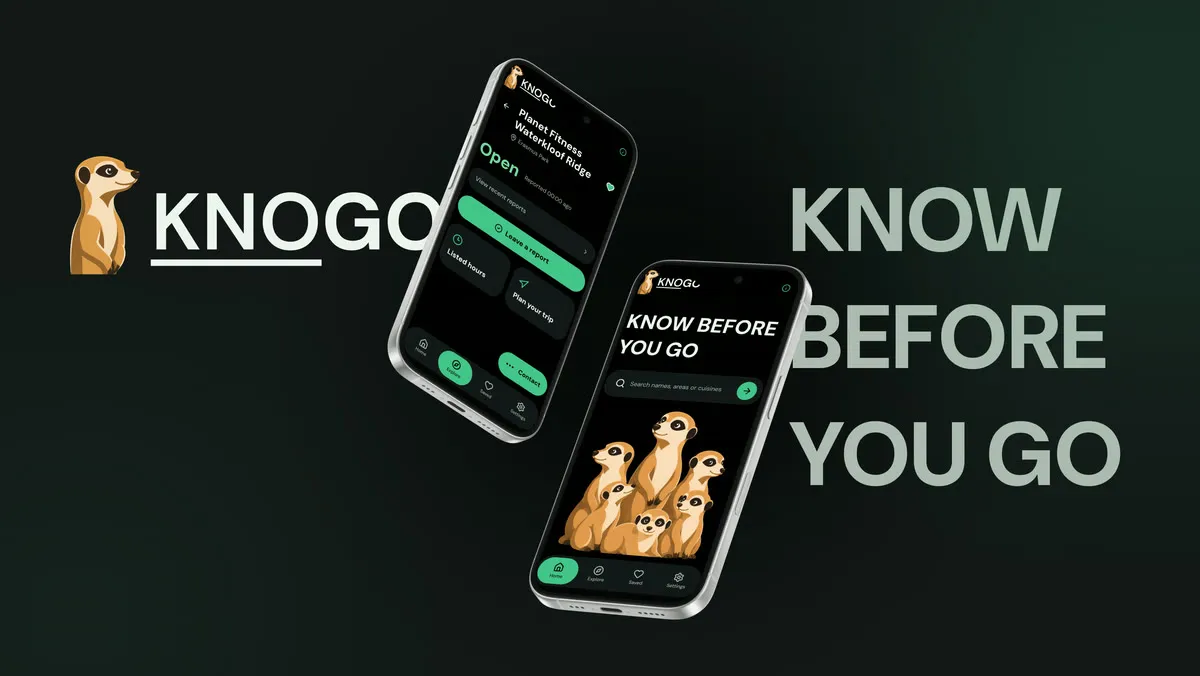
KNOGO, short for “know before you go”, brings community observations, where they came from, and a fuel estimate for the trip into that decision.
Who it’s for
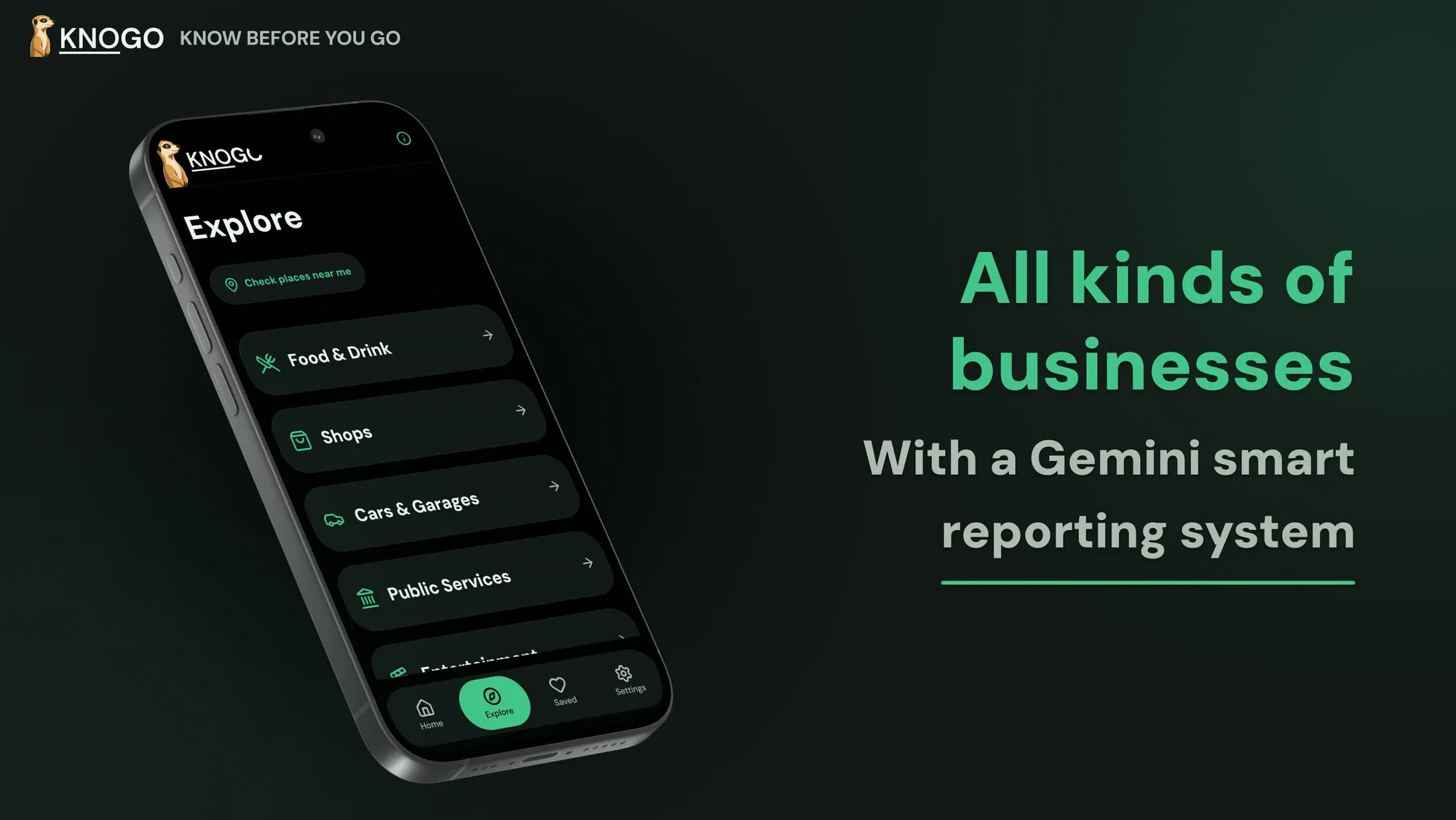
People in Pretoria East deciding whether a trip is worth it. The directory covers Food and Drink, Shops, Cars and Garages, Public Services, Entertainment, and Sport and Outdoors.
Decisions and what they cost
Reports are evidence, not verdicts. A single “closed” report can’t flip a venue to closed. The trust rules weigh how old a report is, whether reports agree, account history and an assessment of reporting patterns. Opposing evidence stays visible. The cost: a real closure can take longer to show, because one person isn’t enough.
AI checks behaviour, not truth. Google Gemini looks for signs of coordinated or abusive reporting. It never decides whether a venue is open or whether someone is lying. Application rules decide the outcome, and an unavailable or inconclusive assessment can’t establish a closure. The cost: more rules to maintain, in exchange for not handing the answer to a model.
Only ask what the contributor can know. Someone who phoned a venue can’t tell you how busy it is. Choosing phone or online, or reporting closed, removes service questions from the report, including answers left in a restored draft. The cost: fewer data points per report.
Missing numbers stay missing. Without fuel consumption there is no litres estimate. Without a price there is no cost. The app never fills a gap with a guess. The cost: some trips show less information, but none of it is invented.
Process
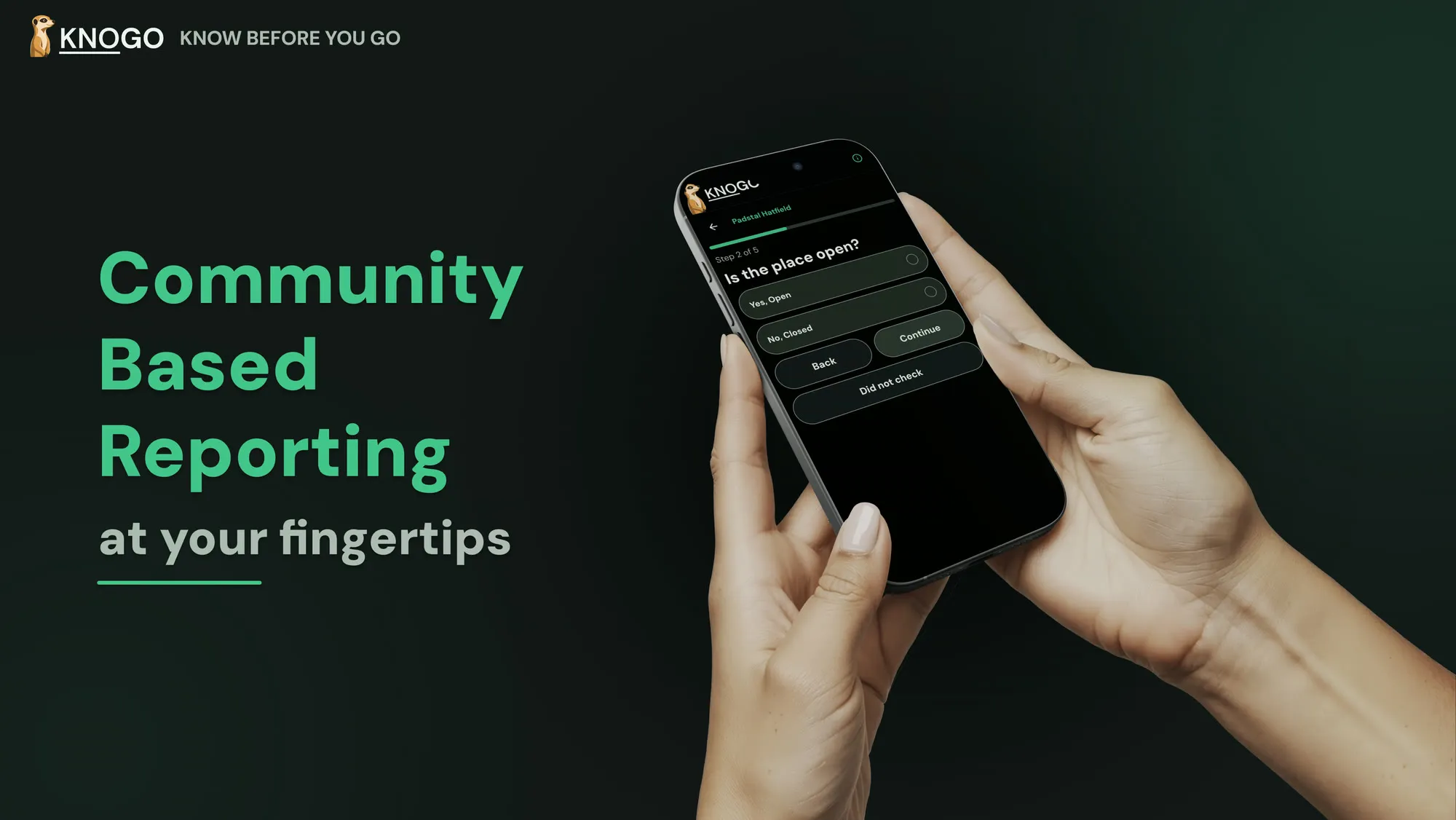
The survey follows what a contributor can actually check:
- Choose how you checked: in person, by phone or online. Online checks need a source link.
- Answer whether the place is open.
- A closed answer goes straight to review. Phone and online checks also skip the service questions.
- In-person open checks can add kitchen, busy level and other service details.
- Review and submit. A received report is not a promise that the status will change.
The product rules live in a shared TypeScript package, outside the screens, so the same rules apply wherever a report is made.
Outcome
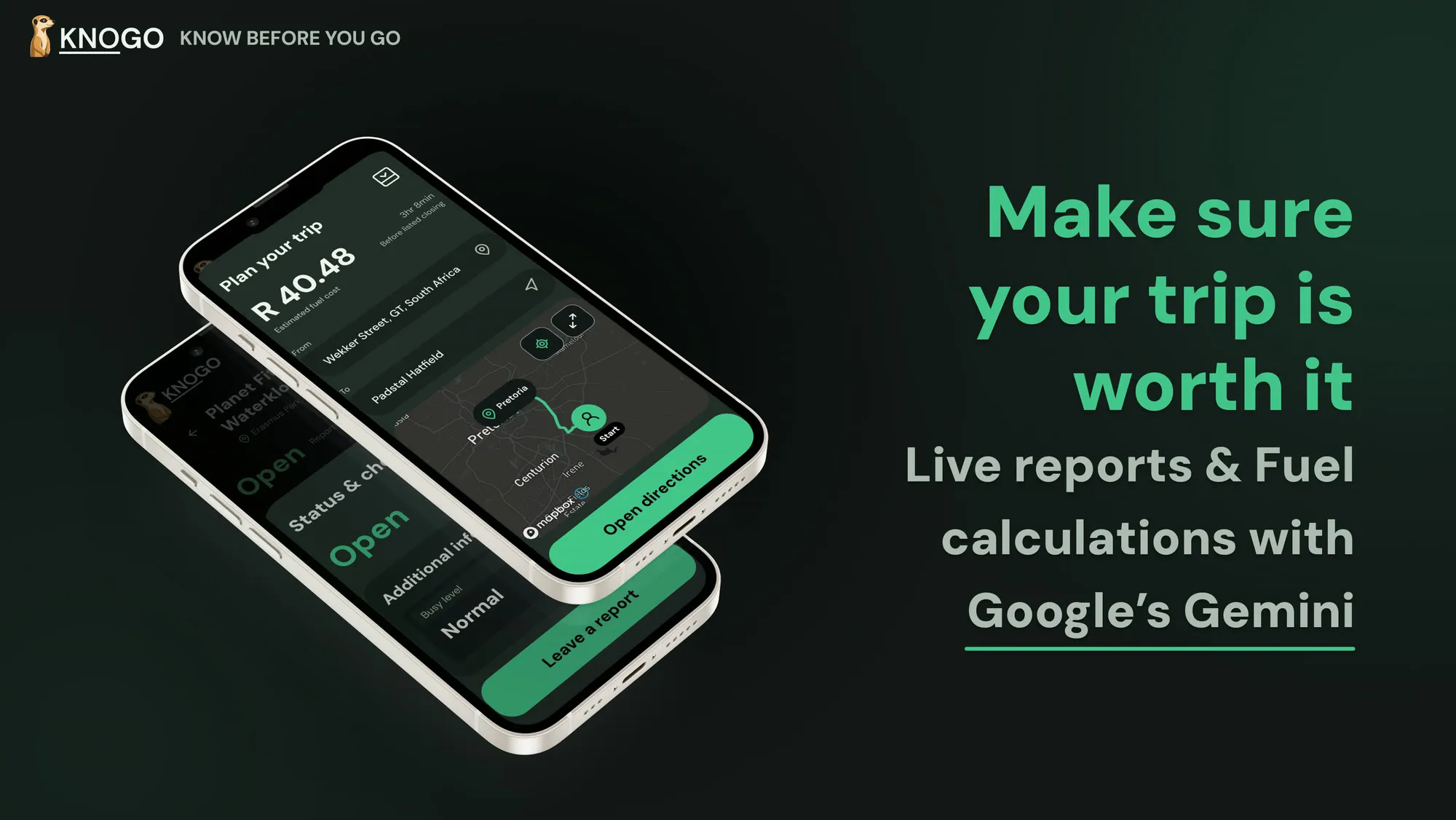
An Android app built with Expo and React Native, backed by Supabase for accounts, storage and backend functions, with Mapbox maps and Gemini for report assessment. Trip planning compares arrival time with listed hours and estimates fuel from your vehicle’s consumption.
What’s next
The app is in Google Play testing, and tester feedback shapes what comes next.